Vastu for Home: Best Direction for Every Room
By Kolte-Patil Team | Last Updated: September 5, 2026
Key Takeaway
Quick Answer: What Are the Best Vastu Directions for a Home? According to traditional Vastu guidance, North and East are generally preferred for entrances and living spaces, South-West for the mast…
Quick Answer: What Are the Best Vastu Directions for a Home?
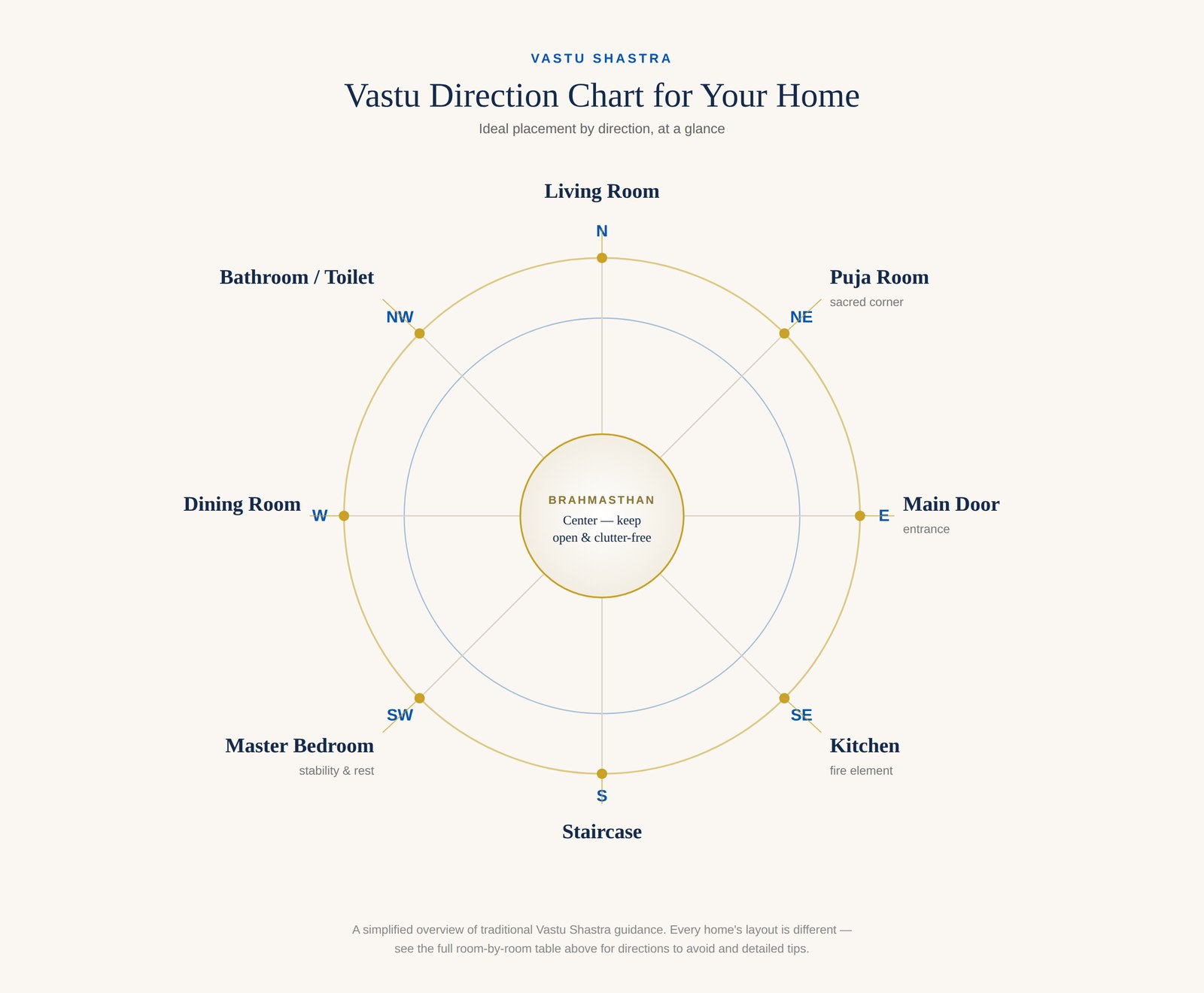
According to traditional Vastu guidance, North and East are generally preferred for entrances and living spaces, South-West for the master bedroom, South-East for the kitchen, and North-East for the puja room. Bathroom placement is commonly preferred toward the North-West or West. A home’s overall layout should be considered rather than judging it by a single room or direction.
Vastu Directions for Every Room at a Glance
| Room | Best Direction | Avoid | Key Tip |
|---|---|---|---|
| Main Door | North, East, North-East | South, South-West | Largest door in the house; keep area clutter-free |
| Living Room | North, East | South-West corner | Heavy furniture along south/west wall |
| Dining Room | West, North-West | Under a beam | Square or rectangular table; face east while eating |
| Master Bedroom | South-West | North-East | Head facing south or east while sleeping |
| Kitchen | South-East | North-East, directly below bathroom | Stove east-facing; keep fire and water apart |
| Bathroom/Toilet | North-West, West | North-East, Centre | Good ventilation; keep door closed |
| Puja Room | North-East | Bedroom, under staircase | Altar on north wall; face east while praying |
| Staircase | South-West, South | Centre of home | Clockwise direction; odd number of steps |
| Garden/Outdoors | North, East | South-West (heavy trees) | Tulsi, bamboo for good energy; water feature in NE |
Why Vastu Matters in Indian Home Design
In India, the layout of a house isn’t just an architectural guideline — it’s a belief system that connects human life with natural forces. Following home vastu shastra principles can create a home that feels peaceful, welcoming, and stable. According to traditional Vastu guidance, embracing these principles is believed to support better health, relationships, and financial stability.
Whether you’re planning a new home, buying property in Pune, or simply realigning your spaces, understanding the basics of room-wise placement is key. Getting the vastu disha (direction) right for each room is the foundation of a balanced, prosperous home. A well-planned home aligned with these principles creates a balanced space where residents can thrive.
Vastu Shastra, literally translated as “science of architecture,” is a traditional Indian system of architecture and spatial planning. It draws on the five elements — earth, water, fire, air, and space (known as Pancha Bhootas) and the eight cardinal directions to guide the placement of rooms, doors, and furniture. While modern architecture prioritises structural efficiency, Vastu adds a layer of directional alignment that many Indian families consider essential when buying or building a home.
East-Facing vs West-Facing Homes: Which is Better?
Both East and West facing homes can bring prosperity if designed correctly.
- East-facing homes generally rank as very auspicious since they welcome the morning sun, symbolizing hope and growth. Keeping the north and east sides open and unobstructed allows for maximum natural light and positive energy.
- West-facing homes can also be positive, especially for people involved in business or politics.
Arranging seating or dining so that people are facing east can further enhance harmony and well-being.
Vastu advice for house: Ensure that the entrance door is properly placed (North-East for East-facing, North-West for West-facing) to attract prosperity.
The following sections will cover important vastu tips and direction and placement tips for each room.
For precise orientation, use a compass (or a smartphone compass app) standing at your main door facing outward. East-facing homes have their main door between 67.5° and 112.5°. North-facing homes fall between 337.5° and 22.5°. The exact degree matters because Vastu divides each direction into sub-zones (called padas), and the ideal entrance placement varies by sub-zone. For example, a door at exactly 90° (due East) is considered excellent, while a door at 112° (south-east leaning) may need remedial adjustments.
Main Door & Entrance: Best Direction and Placement
The house entrance and main door are the gateway for good energy to enter your living space. The main door is best positioned in the north or east direction, since these directions receive maximum morning sunlight and fresh air. A well-designed house entrance in the east direction ensures that the first rays of the sun bathe your home in light and warmth.
To make the most of this, craft the main door from superior quality wood and make it the largest door in the house, symbolizing strength and prosperity. Keep the entrance area clean, well-lit, and free from clutter—this not only creates a welcoming atmosphere but also prevents negative energy from accumulating. Avoid placing shoe racks, dustbins, or any obstacles near the main door, as these can block the flow of good energy. Adding a nameplate or a cheerful welcome mat at the entrance further enhances the auspiciousness of your house entrance, ensuring that you greet every guest and every opportunity with positivity.
Main Door Dos and Don’ts
- Do ensure the door opens inward and clockwise, welcoming energy into the home.
- Do use double-shutter doors for the main entrance where possible — they are considered more auspicious than single-shutter doors.
- Do install a small threshold (dehleez) at the entrance, traditionally believed to keep negative energy out.
- Don’t place the main door directly facing another door, a staircase, a toilet, or a lift — this creates a “piercing” energy flow known as dwar vedha.
- Don’t let the door creak, stick, or have broken hinges — a smooth-functioning door symbolises a smooth flow of opportunities.
- Don’t position a mirror directly in front of the main door, as it is believed to reflect positive energy out of the home.
Main Door Remedies for Apartments and Flats
In most modern Indian apartments, you cannot choose the direction of your main door — it is fixed by the builder’s layout. If your flat’s main door faces a less ideal direction (such as South or South-West), some homeowners use simple traditional touches, such as hanging a toran of mango leaves or marigold above the door, though these are optional and rooted in custom rather than any proven effect.
Avoid keeping broken footwear, umbrellas, or old newspapers outside the door, and never position a dustbin or a broom in direct view of the entrance. If you have a shared corridor, keep your portion of it well-lit with a warm-coloured bulb — stale or dim lighting outside the main door is considered one of the most common reasons energy stagnates at the threshold. For flats where the door opens into a wall less than three feet away, hang a landscape painting or a small mirror on the opposite wall (angled away from the door) to visually open up the space.
Choosing the Right Colours and Materials
The ideal colour for the main door depends on its direction. An east-facing door looks most auspicious in wood tones, light green, or white. A north-facing door pairs well with green or blue. A west-facing door suits blue, white, or silver tones, while a south-facing door is best painted in red, orange, or rust shades. Solid teak, sal, or sheesham wood are the traditional choices; avoid hollow flush doors for the main entrance if possible. A sturdy, well-polished door in the correct tone sets the Vastu tone for the entire home.
Living Room (Hall) Vastu: Creating a Harmonious Gathering Space
The living room (or hall) is the heart of your home, where family and friends come together to share moments and create memories. Placing the living room in the north or east direction encourages natural light and airflow throughout your living space. This orientation allows natural light to fill the room, uplifting the mood and enhancing the overall feel.
Arrange heavy furniture, such as sofas and cabinets, along the south or west wall to provide stability and balance, while keeping the north or east direction open for lighter pieces or decorative elements. Using light colors like light yellow or cream on the walls can further brighten the atmosphere and create a cheerful, inviting atmosphere. Avoid placing mirrors on the south or west wall, as this can disrupt the harmony of the space. Your living room will radiate warmth, comfort, and good energy, making it a welcoming gathering space.
Dining Room Vastu: Placement, Table Position & Family Harmony
The dining room is where families bond over meals, and its Vastu can greatly influence the harmony and well-being of the household. The ideal location for the dining room is in the west or northwest direction, as this placement fosters togetherness during mealtimes.
Position the dining table at the center of the room, and arrange chairs to encourage face-to-face interaction and unity. Opt for a square or rectangular dining table, since these shapes promote even energy distribution. Light, soothing wall colors such as cream or pale yellow help create a calm and pleasant dining environment. Avoid placing the dining table directly under a beam or a sloping ceiling, as this can cause discomfort and disrupt the flow of energy in the room. For a simple improvement, consider placing a clock or a mirror on the north or east wall of the dining room. These simple changes can transform your dining area into a space of joy, nourishment, and family harmony.
Master Bedroom: Ideal Direction and Layout

Your master bedroom is your place of rest and recovery.
Recommended Directions:
- South-West direction: Ideal for the master bedroom to promote stability, strong relationships, and good health.
- Bed should face South or East when sleeping. Avoid sleeping with your head pointing North, which is traditionally considered inauspicious.
- Avoid mirrors directly in front of the bed to prevent disturbed sleep.
Place beds in children’s rooms in the same direction for consistency.
Proper bedroom placement in this direction supports good health and restful sleep. The south-west is considered the “earth” corner of the home — grounded, stable, and protective — which is why it is reserved for the head of the household. If the south-west corner of your home is occupied by a bathroom or a staircase, place your master bedroom in the south direction instead, which is the next best option.
Bed Placement and Sleeping Direction
Position the bed so that its headboard rests against the south or west wall. This means you will sleep with your head pointing south or west and your feet pointing north or east — never the reverse. This placement follows traditional Vastu guidance on sleeping direction, and has a practical upside too: morning light falls on your feet rather than your face. Leave at least a few inches of space between the headboard and the wall to allow airflow, and avoid positioning the bed directly under a ceiling beam, which is traditionally believed to create mental pressure during sleep.
Opt for a solid wooden bed frame — square or rectangular, never round or irregular. Beds made of iron are discouraged in Vastu, as iron is linked to Rahu and is considered disruptive to sleep. Keep the space under the bed clean and empty; avoid using it for storage of shoes, medicines, or paperwork, as clutter beneath the body is thought to disturb rest and subconscious energy.
Furniture, Mirrors and Electronics
Wardrobes and heavy almirahs should be placed along the south or west wall so that they open towards the north or east. Dressing-table mirrors should never directly face the bed — if your flat layout forces this, cover the mirror with a cloth at night or reposition the dressing table at an angle. The same applies to TVs mounted opposite the bed; switch them off fully (not on standby) before sleeping, and ideally cover the screen.
Keep electronics, phone chargers, and Wi-Fi routers out of the bedroom where possible, and definitely away from the headboard. The north-east corner of the master bedroom is the best spot for a small water feature or a fresh flower vase, while the south-west corner should hold the heaviest piece of furniture in the room for grounding energy.
Colours, Lighting and Common Mistakes
Use soft, soothing wall colours — light pink, peach, cream, pale blue, or sage green. Avoid stark white (too stimulating), deep red (associated with restlessness), or black (linked to stagnation). Bedside lamps with warm yellow bulbs are preferable to harsh overhead white lights. Blackout curtains in cotton or linen support deeper sleep and also block early western sun if your bedroom has a west-facing window.
Three of the most common Vastu mistakes in Indian master bedrooms are: placing the bed directly opposite the bedroom door (called “coffin position” and considered highly inauspicious), keeping religious idols or a puja shelf inside the bedroom (the bedroom is a space of rest and intimacy, not worship), and storing broken items or unused electronics. Fixing just these three issues is often enough to transform the energy of the room.
Tip: Incorporating vastu advice while selecting property in Pune ensures better alignment from the start.
Kitchen Vastu: Placement of Stove, Sink & Fridge

In Vastu Shastra, the kitchen represents the “Agni” or fire element, making its placement critical.
Ideal Directions:
- South-East: The best direction for a kitchen, as the fire element governs the southeast direction to align with the fire element.
- The cooking stove must face East.
- Place the sink and water elements, including the wash basin, in the North-East or North direction, keeping fire and water apart.
Proper kitchen placement in the southeast direction and maintaining separation between fire and water elements can attract financial prosperity and stability in the home. These placements help optimise energy flow and promote harmony.
Practical additions: the refrigerator should go in the south-west or west corner of the kitchen, never beside the stove. Store drinking water in the north-east zone. Use light colours like white, cream, or light green for kitchen walls — dark colours are considered inauspicious for the cooking area. If your kitchen platform runs along the south wall, try to position the gas burner at the south-east corner of the counter. In open-plan kitchens common in modern flats, use a breakfast bar or half-wall to create a visual boundary between the cooking and dining zones.
Stove and Cooking Direction
The cook should face east while preparing meals — this is one of the most important Vastu rules for the kitchen and one of the most commonly broken. East-facing cooking is believed to support better focus and positive family energy while cooking. If your platform layout forces a north or west-facing position, this is acceptable, but cooking while facing south is generally considered less favourable, since the south direction combined with the fire element is thought to work against prosperity. Keep the stove at least one foot away from the sink; fire and water should never sit adjacent on the same counter.
Always light the first flame of the day with a clean stove and a clear intention — many families offer a small prayer before cooking. Never leave the stove dirty overnight, and ensure the gas cylinder or piped-gas valve is placed in the south-east corner of the kitchen. A chimney or exhaust fan is essential; stagnant cooking smoke is considered to trap negative energy in the room.
Sink, Water and Appliance Placement
The sink, water filter, and drinking-water pot belong in the north or north-east zone of the kitchen, well separated from the stove. A leaking tap is treated seriously in Vastu — repair it within a day, as dripping water is considered to drain financial energy. Microwave ovens, mixers, and toasters should be placed on the south or south-east counter, ideally not directly beside the stove. The refrigerator works best in the south-west or west; avoid placing it in the north-east corner. Keep the fridge at least a few inches away from the wall for air circulation, and never stick bills, reminders, or negative notes on its door.
Kitchen Storage, Colours and Common Mistakes
Store heavy grains, pulses, and flour in the south or west cabinets. Keep salt in a covered container (open salt is considered to attract negativity) and replace it weekly. Store onions and potatoes away from the stove in a ventilated basket, not in a sealed plastic bag. Spices are best kept close to the cook but not directly above the flame, where heat can degrade them and disturb the energy balance.
For wall and cabinet colours, choose warm, light tones — ivory, cream, beige, light yellow, soft orange, or light green. Avoid black, dark blue, and pure red in the kitchen. Maintain bright lighting, particularly over the cooking area, and ensure at least one window or exhaust for fresh air.
The three most common Vastu mistakes in Indian kitchens are: placing the kitchen directly opposite the main door, locating it in the north-east corner (which clashes with the fire element), and positioning the stove directly under a window. If any of these apply to your flat, small practical adjustments, such as adding a plant near the window or keeping the cooking area well-lit and ventilated, can help offset the layout.
Bathroom & Toilet Placement in Vastu

Bathrooms and toilets can affect the energy of the home if improperly placed.
Best Directions:
- North-West: Ideal for bathrooms and toilets.
- Always avoid toilets in the North-East or Center of the home.
- Ensure proper ventilation and avoid constructing bathrooms next to the kitchen.
Improper placement can lead to stagnation in the home. The northern direction is suitable for water storage or drainage outlets in bathrooms, helping to maintain clean energy flow.
A few additional tips for bathrooms: ensure the toilet seat faces north-south (not east-west), keep bathroom doors closed when not in use, and avoid locating a bathroom directly above the kitchen or puja room on a floor above. If your flat has a bathroom in the north-east (common in older apartment layouts), keeping the space extra clean, dry, and well-ventilated is the most practical way to offset the position. Leaking taps and broken tiles should be repaired promptly regardless of direction.
Puja Room: Direction, Colors & Positioning Tips

The pooja room is the spiritual heart of your home.
Best Practices:
- The northeast corner is the most auspicious and spiritually significant location for the pooja room or puja room.
- Place the altar on the north wall and ensure worshippers face east or north during prayers to align with Vastu principles.
- Use light colors like white, cream, or light yellow for walls.
- Avoid placing pooja rooms in bedrooms or under staircases.
Following vastu shastra for home ensures that the divine energies bless your space. A well-placed pooja room in the northeast corner supports spiritual growth and positive energy in the home.
Staircase Placement: Direction & Design Guidelines
A well-placed staircase is essential for maintaining balanced energy flow in a multi-story home. The staircase is best located in the southwest or northwest direction to support positive energy flow and stability within the house. Constructing the staircase in a clockwise direction proves highly beneficial, as it aligns with the natural movement of energy.
Avoid placing the staircase in the center of the home, as this can create a sense of imbalance and disrupt the overall balance. For safety and enhanced positive energy, install a sturdy railing or balustrade. The number of steps should be odd, and the staircase should not end directly in front of a door or window, as this can cause energy to escape. By following these Vastu guidelines, you ensure that the movement between floors supports the well-being and prosperity of everyone in the home.
Outdoor Spaces & Garden: Direction Tips
Outdoor spaces and gardens are vital for connecting your home with the natural elements and enhancing positive energy flow. Gardens and outdoor areas perform best when located in the north or east direction, maximising the benefits of sunlight, fresh air, and cosmic energy. Designing your garden in these directions ensures that your home receives nature’s blessings and maintains a healthy energy balance.
Incorporate plants and trees known for their positive energy, such as tulsi or bamboo, to further uplift the space. Avoid placing obstacles like rocks or thorny plants, as these can generate negative energy and hinder the smooth flow of positive energies. Adding a water feature, such as a fountain or pond, in the north or east direction can also enhance the feel of your outdoor space. Regular maintenance and watering of plants are essential, as healthy, thriving greenery is a key source of good energy. Thoughtfully designing your outdoor spaces invites nature’s benefits and creates a peaceful, vibrant environment for your home.
Vastu for Flats and Apartments
Most apartment buyers can’t change a building’s structure, so Vastu for a flat is really about what to check before you sign, and what you can still adjust once you move in.
Check Before Buying
- Entrance direction — North, North-East, or East is generally preferred
- Kitchen placement — ideally South-East, and away from the main door
- Master bedroom location — ideally toward the South-West of the unit
- Toilet placement — away from the North-East corner and the centre of the flat
- Natural light and cross-ventilation, especially on the north and east sides
Can Usually Be Adjusted Later
- Bed orientation — head facing south or east while sleeping
- Furniture placement — heavier pieces toward the South-West
- Mirrors — kept out of direct view of the bed and the main door
- Lighting — warm bulbs, with the North-East corner kept bright and open
- Puja placement — a small altar or shelf in the North-East corner
Since a flat’s structure is fixed, most of the value in apartment Vastu comes from thoughtful furniture placement, colour choices, and keeping high-traffic corners like the entrance and the North-East open.
Conclusion
Whether you are building a new home, renovating, or simply rearranging furniture, the direction-based guidelines covered above can help you create a more balanced living environment. The core idea behind Vastu is straightforward: align each room with its corresponding element and direction, maximise natural light and ventilation, and avoid placing conflicting elements (like fire and water) next to each other. You don’t need to rebuild your home — even small changes like repositioning your bed, moving a mirror, or adding a plant in the right corner can make a noticeable difference.
If you are looking for a new home in Pune that already follows these principles, many modern residential projects now integrate direction-conscious design from the blueprint stage.
Frequently Asked Questions
According to Vastu Shastra, East-facing homes are considered most auspicious, as they welcome early morning sunlight, symbolising positivity and growth. North-facing homes are also considered favourable, especially for career success. West-facing homes can work well too if designed properly, with the main entrance placed toward the North-West. As with any Vastu guidance, it’s worth weighing this alongside the practical realities of the property.
According to traditional Vastu guidance, the South-West corner is considered ideal for the master bedroom, believed to support stability, harmony, and restful sleep. The bed is typically positioned so you sleep facing South or East, with mirrors kept out of direct view of the bed and the room kept free of clutter.
The kitchen is traditionally placed in the South-East corner of the house, aligning with the fire element. The stove is usually positioned so you face East while cooking, the sink toward the North or North-East, and the refrigerator in the South or West. Keeping fire and water elements apart is a core principle of kitchen Vastu.
Traditional Vastu guidance advises against placing toilets in the North-East or at the centre of the home, as these zones are considered inauspicious. The North-West or West are the preferred directions instead. Whatever the placement, good ventilation matters, and bathrooms are best kept away from the kitchen or puja room.
The North-East (Ishan) corner is traditionally considered the most auspicious location for a puja room. Light wall colours such as white or cream are typically preferred, and the puja room is best kept out of bedrooms or the space under a staircase. Idols are usually placed against the west or north wall so worshippers face east or north while praying.
Yes. Even in a flat, you can work with what’s fixed — aligning furniture, the kitchen setup, and the puja corner with the directions covered above, since structural changes usually aren’t possible. When flat-hunting, a North-East facing entrance and good natural light are generally considered favourable. See the flats and apartments section above for a fuller checklist.
A few starting points: the main door toward the North-East or East, the master bedroom in the South-West, the kitchen in the South-East, the living room in the North or East, and the puja room in the North-East. Beyond direction, good natural light, ventilation, and an uncluttered layout matter just as much.
A few practical things to check: the entrance direction (North or North-East is generally preferred), where the kitchen and master bedroom fall within the layout, and whether the North-East corner is open rather than boxed in by a bathroom or store room. Not every flat will tick every box, and that’s normal — most buyers weigh Vastu alongside location, layout, and budget rather than treating it as a dealbreaker.