Pune Real Estate Market 2026: Trends, Prices, Hotspots & Outlook
By Kolte-Patil Team | Last Updated: July 10, 2026
Key Takeaway
The Pune real estate market in 2026 is in one of its healthier phases in over a decade. Steady end-user demand, a maturing premium segment, and major infrastructure projects converging — Metro, R…
Pune Real Estate Market: Where Things Stand in 2026
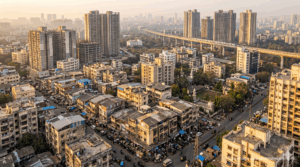
Pune used to be described as Mumbai’s quieter cousin. That description has not been accurate for some time. The city is now one of India’s largest residential property markets by sales volume, and in 2026 it is firmly in its own right — not borrowed shine from Mumbai, not catching up to Bengaluru, but a market with its own demand drivers and its own pace.
Three things define the Pune real estate market today. The first is the decisive shift toward branded developers. After years of half-finished projects and broken delivery promises in the broader industry, buyers in Pune now treat the developer’s track record as a primary filter, not a footnote. The second is the rise of the integrated township and the gated, amenity-led community as the default product — standalone buildings on small plots increasingly look like a previous decade’s idea. The third is the steady upward drift in ticket sizes. The mid-premium and premium segments now account for the bulk of new sales by value, a meaningful inversion of the affordable-led market of ten years ago.
Inventory levels are healthier than they have been in years. New launches are largely keeping pace with absorption rather than outrunning it. None of this means the market is cheap — it isn’t — but it does mean there is real demand underneath the prices, not just speculative froth.
Current Trends Shaping the Pune Real Estate Market
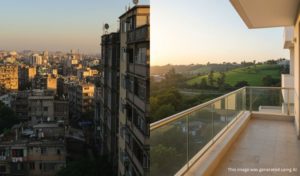
Larger homes are now the mainstream choice. The 3 BHK has moved from aspirational to expected for working professionals and growing families. The 4 BHK, once a luxury outlier, is no longer rare in new launches. Work-from-home has not gone away in Pune the way it has in some cities; people want a study, a guest room, and a balcony that opens to something other than the next building’s window.
Sustainability has stopped being a marketing line. Buyers now ask about IGBC or GRIHA certification before they ask about clubhouse amenities. Solar provisions, rainwater harvesting, EV charging points, and credible green-building credentials have moved from differentiator to baseline. Developers who treat them as add-ons are losing ground to those who designed them in from day one.
Smart-home features are quietly going standard. App-based access control, video door phones connected to your phone, smart metering, and IoT-enabled common areas are now expected in mid-premium projects and above. The novelty has worn off; the absence is now what gets noticed.
Buyers are doing more research and asking sharper questions. RERA registration, OC timelines, financial closure of the project, and the developer’s last three deliveries are now standard pre-booking due diligence. This is good for the market. It rewards developers who have been patient, transparent, and consistent — and it punishes those who have not.
Pune Property Prices: A Micro-Market View
The single most important thing to understand about the Pune real estate market is that there is no single Pune real estate market. The city is a collection of micro-markets, each with its own price band, demand profile, and growth trajectory. A two-kilometre move can change the per-square-foot price by 30%.
The premium and mature corridors — Kothrud, Baner, Balewadi — sit at the top of the price band and have shown stable, single-digit annual appreciation. These are markets where you buy for liquidity and lifestyle rather than aggressive capital growth.
The IT-anchored corridors — Hinjewadi, Wakad, Kharadi, Viman Nagar, Wadgaon Sheri — combine end-user demand with rental yield. These are still the most liquid corridors in the city for both sale and rent. A direct comparison of Wadgaon Sheri and Kharadi is a useful way to think about how two adjacent corridors can serve very different buyer profiles.
The family-oriented corridors — NIBM Road, Undri, Kondhwa — have built their reputation on schools, hospitals, and the kind of social infrastructure that people who plan to actually live in their homes prioritize. Prices here have moved in line with the city average and the pace of demand has remained reliable.
The emerging corridors — Wagholi, Bhugaon, Kiwale, Ravet, Manjari — are where the appreciation story is most interesting. These markets have been the largest beneficiaries of the Ring Road and metro extensions, and entry prices remain meaningfully below the city average. Wagholi and Bhugaon in particular have moved from “outskirts” to “next-best alternative” in less than three years. Bhugaon’s positioning as a green alternative to Kothrud is a representative example of how this shift is happening.
The “Golden Triangle” — Pimple Nilakh, Pimple Saudagar, and the surrounding pocket — deserves a separate mention. It offers the rare combination of central connectivity, established social infrastructure, and a price band that still leaves room for growth.
Top Investment Corridors in the Pune Real Estate Market
If the goal is rental yield, Kharadi and Hinjewadi remain the dependable picks. Both are anchored by IT and ITES employment, both have a steady inflow of working professionals on year-on-year contracts, and both have the kind of supporting retail and F&B that tenants now expect. Kharadi’s role as a maturing IT hub is well-established, and the rental market reflects that.
If the goal is capital appreciation, the conversation shifts to the Ring Road belt. Wagholi, Bhugaon, Kiwale and parts of Manjari are likely to see meaningful re-rating as the Ring Road and supporting connectivity get fully delivered. Buyers entering these markets in 2026 are buying ahead of that re-rating, not after it.
If the goal is the rare combination of yield, appreciation and liquidity, Pimple Nilakh and the Golden Triangle pocket are the considered choice. Long-term holders tend to gravitate here.
And if the goal is end-user, family-first living that holds value rather than spikes, NIBM Road and Undri continue to do what they have always done. NIBM Road’s family-first appeal is not new, but it has aged well.
Infrastructure: The Real Engine Behind Pune’s Property Cycle
Every real estate cycle in Pune over the last twenty years has been driven, in the end, by infrastructure. 2026 is no exception — and arguably more so, because three large infrastructure projects are converging.
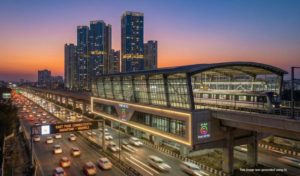
The Pune Metro is the most visible of these. Lines 1 and 2 are now operational across most of their stretches, and Line 3 — the Hinjewadi to Shivajinagar corridor — is progressing on the ground. Properties within walking distance of operational metro stations have begun to command a measurable premium over the surrounding market, and that premium is not going to narrow.
The Pune Ring Road is the larger structural change. It does for Pune what no metro line can do: it makes the outer ring of the city genuinely accessible to the rest of the city. Wagholi, Bhugaon, Kiwale, Manjari and the broader outer band have all been functional beneficiaries. This is the project that, more than any other, is rewriting the price map of the Pune real estate market.
The new Pune International Airport at Purandar is the longest-dated of the three but potentially the most significant in terms of demand redistribution. As and when it becomes operational, the eastern and southeastern corridors of Pune will gain a structural demand boost they have never had before.
Layered on top of these are the city’s Smart City initiatives — bus rapid transit, riverfront development, digital governance — which improve liveability scores in ways that buyers now actively factor into their decisions.
Why NRIs Are Looking at Pune in 2026
NRI participation in the Pune real estate market has strengthened noticeably over the last 18 months, with most interest coming from the UAE, the US, the UK and Singapore. The reasons are not exotic. The rupee remains favourable for buyers earning in dollars, dirhams or pounds. The RERA framework has reduced the kind of documentation anxiety that used to put off remote buyers. Digital booking, virtual site visits and remote registration have made the entire process workable from another time zone.
Pune in particular suits the NRI profile better than some other Indian cities. The premium-segment ticket sizes are still meaningfully lower than comparable Mumbai or Bengaluru product. The rental market is deep enough to support yield-focused buyers. And the buyer pool is large enough that exit liquidity is rarely a problem in established corridors.
Pune Real Estate Market Outlook: 2026 to 2030
The five-year view on the Pune real estate market is constructive without being euphoric, which is the kind of view long-term investors should prefer over the alternative.
Demand is likely to remain underpinned by the city’s continued employment growth — IT and ITES, electronics and EV manufacturing, data centres, education, and an expanding services economy. None of these are short-cycle drivers; they are structural. Pune does not need a new mega-employer to keep its property cycle moving — it needs the existing ones to keep doing what they are already doing, and they are.
By 2030, three shifts look likely. Premium and ultra-premium product (the ₹2 crore-plus band) will contribute a meaningfully larger share of total sales by value than it does today, as the city’s HNI base expands and as Pune-headquartered businesses scale. Integrated township product will continue to outpace standalone projects in absorption, because that is what the buyer base is actually choosing. And sustainability and wellness features will move from “expected” to “regulatory or near-regulatory” — the floor will rise.
For buyers and investors weighing entry timing, 2026 is one of the more interesting windows in recent memory. The infrastructure pipeline is being delivered rather than promised. Inventory is at healthy levels. Prices are not cheap, but they are also not stretched. And the next five years should reward patient holders in well-chosen corridors.
Investing in the Pune Real Estate Market with Kolte Patil
Kolte Patil Developers has been part of the Pune real estate market for over three decades. Across that time we have delivered more than 2 crore square feet of development, with a presence across most of the corridors discussed above — Hinjewadi, Wakad, Baner, Kharadi, Pimple Nilakh, NIBM, Bhugaon, and the emerging Ring Road belt.
The reason buyers and investors return is not one specific feature; it is the consistency. Design integrity, on-time delivery, RERA compliance, and the kind of post-possession service that becomes obvious only a few years after handover. We have always thought of ourselves as builders with a manufacturing-and-services mindset rather than a project-by-project mentality, and that shows up in the product.
If you are evaluating the Pune real estate market in 2026, our ongoing residential projects in Pune are a good place to start the conversation. The portfolio spans price bands, configurations and corridors, so it is usually possible to find something that fits both your end-use and your investment view.
Frequently Asked Questions
Yes, with the usual caveats that apply to any property investment. Pune in 2026 has a healthier inventory position than it has had in years, a maturing buyer base, and three large infrastructure projects converging. For investors with a 5–10 year horizon and a clear corridor view, it is one of the more attractive Indian property markets right now.
It depends on what you are optimizing for. Kharadi and Hinjewadi remain the strongest rental yield markets. Wagholi, Bhugaon and Kiwale offer the most interesting capital appreciation upside, supported by Ring Road delivery. Pimple Nilakh and the Golden Triangle pocket offer the rare combination of yield, appreciation and exit liquidity.
Pune is meaningfully more affordable than Mumbai for comparable quality, and competitive with Bengaluru on both price and infrastructure trajectory. It is often the considered choice for buyers who want value and lifestyle without compromising on connectivity or employment depth.
Three things, in roughly this order: infrastructure delivery (Metro, Ring Road, the upcoming airport), continued employment growth across IT, manufacturing and services, and a structural shift in buyer preference toward branded developers and integrated townships. The first of these is the largest single factor right now.
For end-users with a clear use-case and a 5+ year horizon, waiting rarely helps. For investors, the more relevant question is corridor selection rather than market timing — the city-wide story is in good shape, but specific micro-markets will outperform others meaningfully. The window before the full impact of the Ring Road, Metro Line 3 and the new airport gets priced in is genuinely interesting.