Ivy Estate Wagholi: Complete NRI Property Investment Guide [2026]
By Kolte-Patil Team | Last Updated: September 1, 2026
Key Takeaway
Planning NRI property investment in Pune? Ivy Estate Wagholi offers RERA-registered homes with proven 3–5% rental yields. Complete guide covering FEMA rules, documents, tax benefits, and step-by-…
Ivy Estate in Wagholi is one of the most promising NRI property investment opportunities in Pune today. Whether you are based in the US, UK, UAE, Canada, or Australia, the combination of a favourable rupee-dollar exchange rate, robust infrastructure growth along Pune’s Eastern corridor, and transparent RERA-regulated transactions makes 2026 an ideal time to invest in Indian real estate. This guide covers everything an NRI needs to know — from eligibility rules and documentation to tax benefits and what makes Wagholi a compelling destination for NRI property investment in Pune.
Can NRIs Buy Property in India? Eligibility & Legal Framework
Yes, Non-Resident Indians (NRIs) and Persons of Indian Origin (PIOs) can freely purchase residential and commercial property in India under the Foreign Exchange Management Act (FEMA). There is no requirement for prior approval from the Reserve Bank of India (RBI) for most residential purchases. However, agricultural land, plantation property, and farmhouse purchases require special RBI permission.
Key legal points to know before you invest:
- FEMA compliance: All transactions must be conducted through normal banking channels using NRE (Non-Resident External) or NRO (Non-Resident Ordinary) accounts. Payments cannot be made in foreign currency directly.
- Power of Attorney: If you cannot be present in India for the purchase, you can execute a registered Power of Attorney (PoA) in favour of a trusted representative.
- Joint ownership: NRIs can hold property jointly with another NRI, but not jointly with a resident Indian without specific conditions.
- Number of properties: There is no restriction on the number of residential properties an NRI can own in India.
Documents Required for NRI Property Purchase in India
Before initiating any booking or agreement, NRIs should have the following documents in order. Missing paperwork is the most common reason for transaction delays.
- Valid Indian Passport (with current visa pages)
- OCI/PIO Card (if applicable)
- PAN Card — mandatory for all property transactions above ₹50 lakhs and for filing TDS claims
- NRE or NRO Bank Account details for fund transfer
- Address proof of overseas residence (utility bill, bank statement)
- Recent passport-size photographs
- Power of Attorney document (if purchasing through a representative in India)
Why NRI Property Investment in Pune Outperforms Other Markets in 2026
Pune consistently ranks among India’s top 3 cities for NRI property investment in Pune and across Maharashtra, and 2026 presents a particularly strong entry window. Here is why the fundamentals are compelling right now:
1. Rupee-Dollar Dynamics
For NRIs holding USD, GBP, or AED, the exchange rate advantage significantly amplifies purchasing power. A property priced at ₹1 crore effectively costs considerably less in dollar terms than comparable real estate in any global city — while delivering rental yields of 3–5% and capital appreciation potential of 8–12% annually in growth corridors like Wagholi.
2. Infrastructure-Led Growth Along the Eastern Corridor
Wagholi sits in Pune’s Eastern growth corridor, one of the city’s most infrastructure-rich zones. Key developments driving appreciation include the Pune Metro Phase 2 extension, the Pune Ring Road project connecting Wagholi to the airport and IT hubs, and the continued expansion of Kharadi IT Park. These projects translate directly into rental demand and long-term price appreciation for properties in this belt.
3. RERA Transparency and Buyer Protection
Since the Real Estate (Regulation and Development) Act came into force, NRI buyers have significantly better legal protection. Developers must register all projects with MahaRERA, deposit 70% of collections in an escrow account, and adhere to committed delivery timelines. For NRIs investing from abroad, this statutory framework materially reduces risk compared to pre-RERA transactions.
Why Wagholi Is a Strong NRI Investment Micro-Market
Not all Pune locations offer the same risk-return profile for NRI property investment in Pune. Wagholi’s positioning — on the eastern edge of Pune near Kharadi and Viman Nagar — gives it a distinct advantage for both capital appreciation and rental income generation:
- Proximity to IT employment hubs: EON IT Park, World Trade Centre Kharadi, and Magarpatta City are all within 10–15 minutes, ensuring consistent tenant demand from tech professionals.
- Social infrastructure: Wagholi now has established malls, international schools, and multi-specialty hospitals — reducing the under-development risk that made early-stage investments uncertain.
- Connectivity: Direct access to the Pune-Ahmednagar highway, Nagar Road, and proximity to the planned Metro corridor make commuting practical for working professionals.
- Price positioning: Compared to Viman Nagar or Kharadi, Wagholi offers 15–20% lower entry prices for comparable product, with strong catch-up potential as infrastructure matures.
Community Living at Ivy Estate in Wagholi
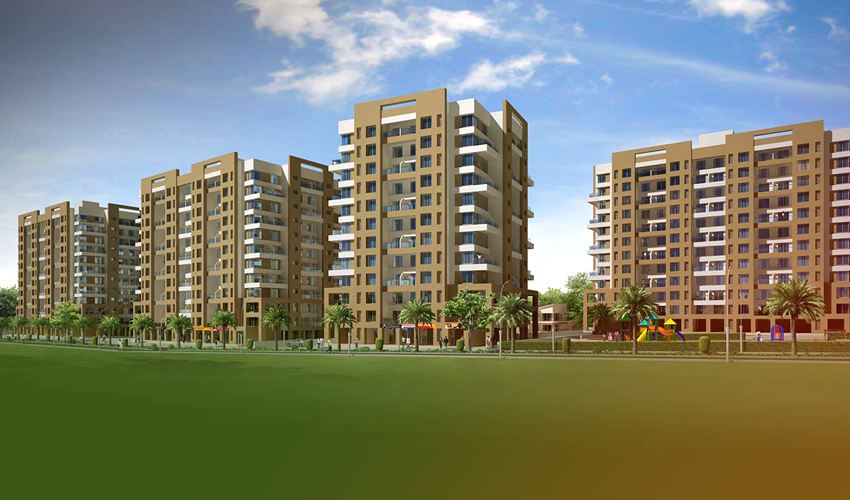
Ivy Estate is Kolte-Patil’s flagship integrated township in Wagholi, spanning over 100 acres. With more than 1,600 families already in residence, it offers NRIs the rare advantage of buying into an established, functioning community rather than a construction site promise.
Key features that make Ivy Estate compelling for NRI buyers:
- Scale and completeness: A true township with residential zones, commercial spaces, landscaped open areas, and dedicated amenity blocks — reducing dependence on external infrastructure.
- Amenities: Clubhouse, swimming pool, indoor and outdoor sports courts, jogging tracks, children’s play areas, and community halls — all managed by a professional society.
- Security infrastructure: 24/7 gated security with CCTV surveillance, intercom systems, and visitor management — critical for NRI owners whose properties may be unoccupied between visits.
- Ready-to-move units available: Unlike off-plan investments, Ivy Estate has completed units available for immediate possession, eliminating construction risk for NRI buyers.
- Rental potential: The large working professional community in the Kharadi-Wagholi belt ensures strong rental demand, making Ivy Estate a viable buy-to-let option for NRIs not intending to self-occupy immediately.
Tax Benefits and Implications for NRI Property Buyers
Understanding the tax structure is essential before committing to NRI property investment in Pune. Here is a summary of the key provisions under the Income Tax Act, 1961:
TDS on Property Purchase
When an NRI sells property in India, the buyer must deduct TDS at 20% on long-term capital gains (property held for more than 2 years), or at the applicable slab rate on short-term gains. NRIs purchasing property should also note that stamp duty and registration charges are identical to those applicable to resident Indians.
Home Loan Tax Benefits
NRIs are eligible for home loans from Indian banks and NBFCs, and can claim deductions under Section 24(b) — up to ₹2 lakh on interest paid — and Section 80C — up to ₹1.5 lakh on principal repayment. These are the same provisions available to resident Indians. Loan repayments must be made from NRE or NRO accounts.
Repatriation of Sale Proceeds
NRIs can repatriate up to USD 1 million per financial year from the sale of property in India, subject to applicable taxes being paid. Proceeds from properties purchased with NRE funds can be fully repatriated. However, NRO-funded purchases carry repatriation limits that you should clarify in advance. We strongly recommend consulting a CA familiar with FEMA and DTAA provisions before you finalise your investment.
RERA Registered and Ready to Move In
Ivy Estate is registered with MahaRERA under Registration No. P52100001066. This registration is verifiable directly on the MahaRERA portal, giving NRI property investment in Pune the statutory protection buyers specifically need when transacting from abroad. Verifying the current project status on the official MahaRERA website before booking any unit is always advisable.
Kolte-Patil Developers is one of Pune’s most established real estate companies, with over 30 years of development experience, 75+ completed projects, and 25 million sq. ft. delivered across residential, commercial, retail, IT parks, and integrated townships in Maharashtra and Karnataka. As a result, this track record provides the institutional credibility that NRI investors — who cannot visit a site every month — specifically require when committing capital from abroad.
How to Buy Ivy Estate as an NRI: Step-by-Step Process
- Initial inquiry: Contact the dedicated Kolte-Patil NRI Sales team through the NRI Lounge for project-specific unit availability, current pricing, and floor plan options.
- Document preparation: Gather your passport, PAN card, OCI card (if applicable), NRE/NRO account details, and overseas address proof.
- Site visit or virtual tour: Kolte-Patil facilitates virtual tours and dedicated NRI visit programs for overseas buyers unable to travel to India.
- Booking and agreement: Pay the booking amount via NRE/NRO wire transfer. Review the Sale and Purchase Agreement carefully — pay particular attention to the possession date, penalty clauses, and specification schedule.
- Home loan (if applicable): Apply through an Indian bank or NBFC. Kolte-Patil has tie-ups with major lenders that have dedicated NRI home loan desks.
- Registration: Property registration is mandatory. If you cannot be present, execute a PoA before the Indian Consulate or Embassy in your country of residence.
- Possession and rental management: Post-possession, Kolte-Patil offers property management assistance to help NRI owners rent out units without managing tenant relationships directly.
Ready to Invest in Ivy Estate as an NRI?
Kolte-Patil’s dedicated NRI Sales team can guide you through unit availability, current pricing, floor plans, home loan options, and the complete documentation process — from booking to possession.
Frequently Asked Questions
Can an NRI buy residential property in Pune without visiting India?
Yes. NRIs can complete the entire purchase process remotely by executing a registered Power of Attorney (PoA) in favour of a trusted representative. The PoA must be notarised and apostilled in the country of residence and then registered at the Sub-Registrar’s office in India. Kolte-Patil’s NRI team provides dedicated support to guide buyers through this process.
What is the TDS rate when an NRI sells property in India?
For long-term capital gains — property held for more than 2 years — TDS is deducted at 20% plus applicable surcharge and cess. For short-term gains, TDS applies at the NRI’s applicable income tax slab rate. NRIs can apply for a lower deduction certificate from the Income Tax Department under Section 197 if their actual tax liability is lower than the TDS rate.
Is Wagholi a good area for NRI property investment in 2026?
Yes. Wagholi offers a strong risk-return profile for NRI investors in 2026. Its proximity to Kharadi IT Park and EON IT Park drives consistent rental demand from tech professionals, while ongoing infrastructure investments — including Metro connectivity and the Ring Road — support capital appreciation. Entry prices remain 15–20% below comparable zones like Viman Nagar, providing meaningful upside potential for early movers.
Can NRIs get a home loan in India to buy property?
Yes. NRIs are eligible for home loans from most Indian banks including SBI, HDFC, ICICI, and Axis Bank, as well as several NBFCs. The loan-to-value ratio is typically up to 80% of the property value. Repayments must be made through NRE or NRO accounts, and interest and principal components are eligible for tax deductions under Sections 24(b) and 80C respectively.
How many properties can an NRI own in India?
Under FEMA guidelines, there is no restriction on the number of residential or commercial properties an NRI can own in India. However, agricultural land, plantation property, and farmhouses cannot be purchased by NRIs without prior RBI approval.